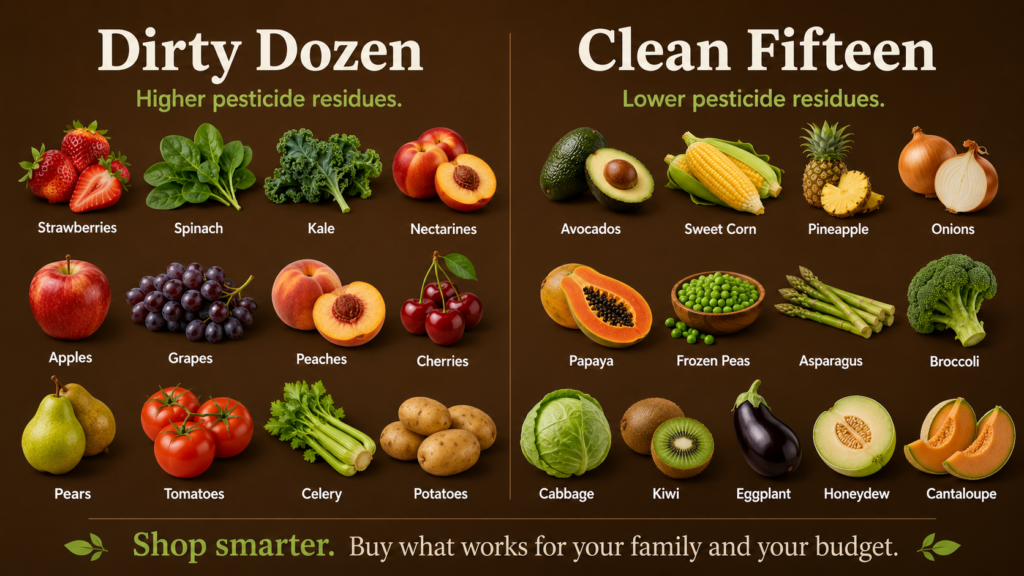
What is the Dirty Dozen? It’s a shopping guide that many people use when choosing fresh produce. The name can sound alarming, but the Dirty Dozen is simply a list published each year by the Environmental Working Group (EWG) using government testing data on pesticide residues found on fruits and vegetables after they have been prepared for testing.
Alongside the Dirty Dozen, the EWG also publishes the Clean Fifteen. Many shoppers use these lists to help decide when they may choose organic produce and when conventional options may better fit their budget.
Understanding how these lists work can help you make informed grocery shopping decisions without overcomplicating healthy eating.
Why This Matters
- Helps you make informed produce shopping decisions.
- Can help stretch your grocery budget.
- Explains the difference between the Dirty Dozen and Clean Fifteen.
- Makes grocery shopping feel less overwhelming.
- Encourages eating plenty of fruits and vegetables, whether you choose conventional or organic.
The Simple Formula
Dirty Dozen = Produce that the Environmental Working Group (EWG) identifies as having higher pesticide residues based on its annual analysis of government testing data.
Clean Fifteen = Produce identified by EWG as having lower pesticide residues, making conventional options a practical choice for many shoppers.
The Dirty Dozen and Clean Fifteen are shopping guides—not food safety lists. Washing fresh produce is still important, and eating plenty of fruits and vegetables remains one of the healthiest habits you can build.
Everyday Examples
Many shoppers use the Dirty Dozen and Clean Fifteen together when planning their grocery trips. For example, someone may choose organic strawberries or spinach if they fit the budget because those foods often appear on the Dirty Dozen list. At the same time, they may buy conventional avocados, onions, or bananas because those foods are often found on the Clean Fifteen list.
The lists can also help when grocery prices change. If organic produce is on sale, it may be a good time to stock up. If not, the Clean Fifteen can help you feel comfortable choosing conventional options for many everyday fruits and vegetables.
Another practical approach is to focus on eating a variety of fruits and vegetables rather than worrying about making every purchase perfect. The Dirty Dozen and Clean Fifteen are simply tools that can help you make informed choices based on your family’s needs and budget.
Yum’s Tips
- Use the Dirty Dozen and Clean Fifteen as shopping guides, not strict rules.
- Buy organic when it makes sense for your budget and shopping priorities.
- The Clean Fifteen can help you save money by showing where conventional produce may be a practical choice.
- Wash fresh fruits and vegetables before eating or preparing them, whether they’re organic or conventional.
- Remember that eating more fruits and vegetables is more important than avoiding them because of the list.
Keep It Simple
- The Dirty Dozen and Clean Fifteen are shopping guides designed to help you make informed produce choices.
- You don’t have to buy everything organic to enjoy a healthy diet.
- Use the lists in a way that fits your family’s needs and grocery budget.
- Wash all fresh produce before eating or cooking.
- Focus on eating a variety of fruits and vegetables throughout the week.
Yum’s Note
When I first learned about the Dirty Dozen, I thought it meant I had to buy everything organic. Over time, I realized it was simply another tool to help me make informed shopping decisions. I use the Dirty Dozen and the Clean Fifteen together to decide where I want to spend a little more and where conventional produce works just fine for me. It helps me shop smarter, stay within my budget, and keep plenty of fruits and vegetables on my table.
For more everyday pantry ideas, Pantry Staples That Make Simple Meals Easier shares practical ideas for choosing everyday ingredients you’ll actually use, helping you save time and make simple, flavorful meals throughout the week.
Learn more about the latest Dirty Dozen and Clean Fifteen lists, how they are developed, and how many shoppers use them as one factor when making produce purchasing decisions.
Shop Smarter is filled with practical tips to help you understand food labels, compare products, and make informed choices every time you shop
Leave a comment, share with someone who wants to shop smarter, and join Yum’s Kitchen for more Simple Formulas, practical cooking tips, and fresh recipe inspiration.