How to stock a pantry you’ll actually use starts with keeping the foods you actually use—not having the biggest collection of ingredients. When you plan meals that share ingredients, grocery shopping becomes easier, food waste goes down, and replacing pantry staples becomes simple.
Keeping a small collection of versatile staples on hand makes it easier to prepare everyday meals without starting from scratch. Instead of buying the same basics over and over, you’ll spend most grocery trips replacing what you’ve used and picking up fresh foods for the week.
A well-stocked pantry gives you the flexibility to cook simple, flavorful meals while making the most of your grocery budget.
Why This Matters
- Makes meal planning easier.
- Helps reduce food waste.
- Saves money by using ingredients in multiple meals.
- Makes grocery shopping more efficient.
- Helps ensure you always have the basics for simple meals.
The Simple Formula
Buy what you use. Plan meals that share ingredients. Replace what you use each week.
A practical pantry is built around versatile ingredients that can be mixed and matched into many different meals. Start with a few dependable staples, then gradually build a pantry that reflects the way you enjoy cooking.
Everyday Examples
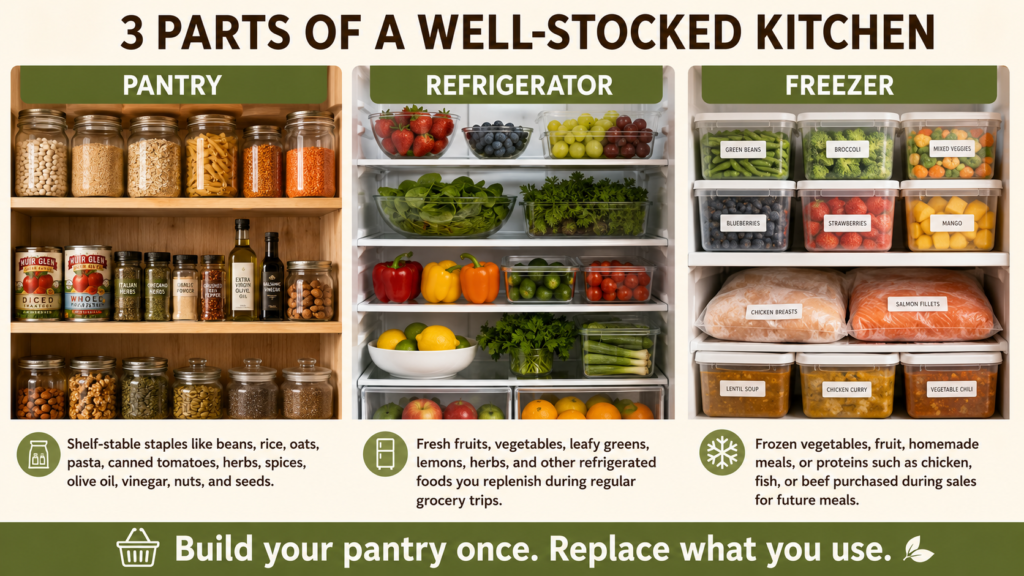
A practical kitchen goes beyond the pantry. Pantry staples like beans, rice, oats, pasta, canned tomatoes, herbs, and spices provide a dependable foundation for everyday meals. Fresh fruits, vegetables, and other refrigerated foods can be replaced during your regular grocery trip, while your freezer is a great place to stock up on foods you use regularly when they’re on sale. Whether that’s frozen vegetables, fruit, homemade meals, or proteins like chicken, fish, or beef, buying extra during a good sale can help stretch your grocery budget.
Planning meals that share ingredients also makes grocery shopping easier. A bag of spinach can become salads, smoothies, and wraps. Chickpeas can be used in salads, bowls, and pasta dishes. One shopping trip can provide ingredients for several meals while helping reduce food waste.
Yum’s Tips
- Replace pantry staples as you use them instead of waiting until you run out.
- Refresh fresh fruits and vegetables during your regular grocery trip.
- Stock up on foods you use regularly when they go on sale, if your budget and storage space allow.
- Plan meals that share ingredients to save time and reduce food waste.
- Build your pantry one staple at a time—you don’t have to buy everything at once.
Keep It Simple
- Buy ingredients you’ll actually use.
- Plan meals that share ingredients.
- Replace what you use each week.
- Keep versatile staples on hand.
- A practical pantry saves time, money, and helps reduce food waste.
Yum’s Note
Over the years, the way I grocery shop has changed. I used to think I needed to buy everything at once, but eventually I realized it was much easier to build a pantry first and then simply replace what I used. Now my pantry stays stocked, I pick up fresh fruits and vegetables during my regular grocery trips, and I take advantage of good sales when they fit my budget. I may run out of an ingredient now and then, but I’m rarely out of food. That simple shift has helped me meal plan more easily, reduce food waste, and make the most of my grocery budget.
Learning what different food labels mean makes grocery shopping less confusing and helps you compare products more easily. What Does Non-GMO Mean? explains one of the most common labels you’ll see at the grocery store and how it differs from other certifications.
Learn how to safely store pantry staples, fresh foods, and frozen ingredients with the USDA FoodKeeper. It provides storage guidance to help reduce food waste and keep foods at their best quality.
Shop Smarter is filled with practical tips to help you understand food labels, compare products, and make informed choices every time you shop.
Leave a comment, share with someone who wants to shop smarter, and join Yum’s Kitchen for more Simple Formulas, practical cooking tips, and fresh recipe inspiration.