What does Non-GMO mean? Have you ever picked up a product at the grocery store, noticed the Non-GMO Project Verified label, and wondered what it actually means? You’re not alone. Food labels can be confusing, especially when different certifications seem to promise similar things.
The truth is, Non-GMO has a very specific meaning. It tells you that a food or ingredient was not made using genetically modified organisms, but it doesn’t automatically mean the product is organic, pesticide-free, or more nutritious.
Understanding what the Non-GMO label does—and doesn’t—mean can help you read food labels with more confidence and make grocery shopping a little simpler.
Why This Matters
- Makes grocery shopping less confusing by explaining what the Non-GMO label actually means.
- Helps you compare food labels more easily.
- Prevents common misunderstandings about organic, pesticides, and nutrition.
- Makes it easier to choose foods based on your personal preferences and budget.
- Helps you understand one food label at a time.
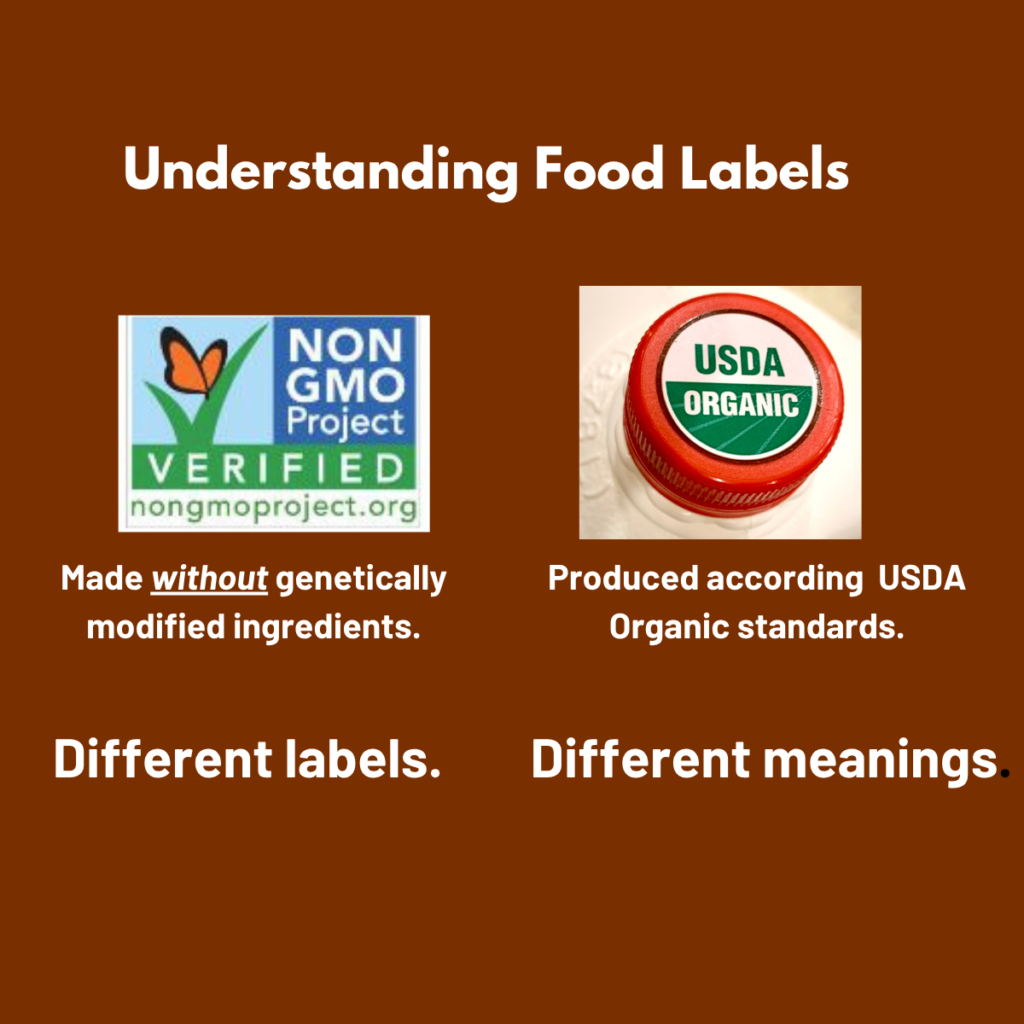
The Simple Formula
Non-GMO = Not made with genetically modified ingredients.
It does not automatically mean a product is organic, pesticide-free, healthier, or more nutritious.
Imagine you’re standing in the cereal aisle comparing two similar products. One box has a Non-GMO Project Verified label, while the other doesn’t. That label tells you the verified product was made without genetically modified ingredients, but it doesn’t tell you whether one cereal is healthier than the other. Looking at the ingredient list and nutrition facts can help you make a more complete comparison.
You might also notice a Non-GMO Project Verified label on foods like tortilla chips, corn chips, soy milk, tofu, snack bars, or cooking oils. These are products that may contain ingredients commonly available in genetically modified forms, so the label provides additional information about how those ingredients were sourced.
Fresh fruits and vegetables are another example. Many produce items, such as bananas, oranges, blueberries, strawberries, and peaches, are not commercially available as genetically modified varieties, so you may not see a Non-GMO label on them at all. The label simply may not be relevant for those foods.
The more you understand what different food labels mean, the easier it becomes to choose the foods that best fit your needs and preferences.
Yum’s Tips
- Learn what each food label actually means before using it to guide your shopping decisions.
- Compare the ingredient list, nutrition facts, and price instead of relying on a single label.
- Buy the foods that fit your family’s needs, preferences, and budget.
- Focus on understanding one food label at a time instead of trying to memorize everything at once.
- Remember that the Non-GMO label is just one piece of information that can help you make informed grocery shopping decisions.
Keep It Simple
- Non-GMO means a food or ingredient was not made using genetically modified organisms.
- A Non-GMO label does not automatically mean a product is organic, pesticide-free, healthier, or more nutritious.
- Read food labels as a whole instead of relying on a single claim or certification.
- Learn one food label at a time to make grocery shopping feel simpler.
- Small steps in understanding food labels can make everyday shopping easier.
Yum’s Note
I’ll be honest—I used to think the Non-GMO label meant a food was grown without pesticides. As I learned more about food labels, I realized that Non-GMO simply tells me the product wasn’t made with genetically modified ingredients. That understanding helped me shop with more confidence and focus on what each label actually means instead of making assumptions. Learning one label at a time has made grocery shopping feel much simpler, and I hope it does the same for you.
Pantry Staples That Make Simple Meals Easier shares practical tips for stocking everyday ingredients you’ll actually use. Building a well-stocked pantry makes grocery shopping easier and helps you put simple, flavorful meals together.
Learn more about the Non-GMO Project Verified certification and how products earn the label.
Shop Smarter is filled with practical tips to help you understand food labels, compare products, and make informed choices every time you shop
Leave a comment, share with someone who wants to shop smarter, and join Yum’s Kitchen for more Simple Formulas, practical cooking tips, and fresh recipe inspiration.
Image Credits
Non-GMO Project Verified® logo:
Image by Dei Fratelli Tomatoes via Wikimedia Commons. Licensed under the Creative Commons Attribution-ShareAlike 4.0 International (CC BY-SA 4.0) license.
https://creativecommons.org/licenses/by-sa/4.0/deed.en
USDA Organic certification image:
Image via Wikimedia Commons. Licensed under the Creative Commons Attribution-ShareAlike 4.0 International (CC BY-SA 4.0) license.
https://creativecommons.org/licenses/by-sa/4.0/deed.en